







Table of Contents
Get more resume writing tips, career insights, and workforce trends in your personalized search experience.
Your graduate school CV is often one of the first things an admissions committee reviews, making it a key part of your application. A strong CV provides a clear picture of your academic background, research experience, achievements, and potential for success.
In this guide, you’ll learn how to write a CV for graduate school, including key sections, formatting best practices, and common mistakes to avoid. We’ll also share real examples to help you create a polished CV that showcases your qualifications and strengthens your application.
Want to save time and have your CV ready in five minutes? Try Zety’s CV maker online. It’s fast and easy to use. Plus, you’ll get ready-made content to add with one click.
See more professional CV examples made with our builder.
One of our users, Colette, had this to say:
Excellent service! Great platform that took all the stress out of CV writing. Would definitely use it again.
What Is a CV for Graduate School?
A CV for graduate school is a document that summarizes your academic background, research experience, achievements, and qualifications. Many graduate programs require a CV (short for curriculum vitae) as part of the application process.
Admissions committees use CVs to quickly assess whether an applicant has the academic and research background needed for graduate-level study. It provides evidence of qualifications beyond grades and test scores and helps admissions committees:
- Assess your academic achievements
- Evaluate your research experience and interests
- Understand your involvement in your field
- Determine your potential for success in graduate-level study
What Should Be on a Grad School CV?
A graduate school CV should include the key academic and research sections that demonstrate your qualifications for advanced study. While the exact sections may vary by field and program, most graduate CVs contain the following information:
- Contact information
- Educational background
- Research experience
- Publications and presentations
- Academic projects
- Teaching or tutoring experience
- Work, internship, or volunteer experience
- Honors, awards, and scholarships
- Relevant skills and certifications
- Professional memberships and affiliations
The template below shows how to organize a CV for a graduate school application. You can add or remove sections based on your experience and your field’s expectations.
For example, research-focused programs may place greater emphasis on publications and research experience, while professional programs may prioritize relevant skills and work experience.
CV Template for Graduate School
You can use the following graduate school CV template as a starting point and customize each section to reflect your academic background, research experience, achievements, and the requirements of the programs you’re applying to.
[Full Name]
[Phone Number] | [Professional Email Address] | [City, State] | [LinkedIn Profile (optional)]
Education
[Degree, Major] | [School Name] | [Graduation Date (or Expected Graduation Date)]
- [GPA (if strong and relevant)]
- [Academic honors, scholarships, or awards]
- [Relevant coursework (optional)]
Research Experience
[Position Title], [Lab or Department Name] | [Dates]
- [Description of research focus, methods, and key responsibilities]
- [Key contributions, outcomes, publications, or presentations]
Publications & Presentations
- [Publication Title], [Journal/Conference], [Year]
- [Presentation Title], [Event Name], [Year]
Academic Projects
[Project Title] | [Dates]
- [Brief description of the project, methods used, and your role]
- [Key outcomes, results, or academic relevance]
[Teaching, Tutoring, or Leadership] Experience
[Position Title], [Organization Name] | [Dates]
- [Key responsibilities and impact]
- [Examples of mentoring, instruction, leadership, or coordination]
Relevant Experience
[Job Title], [Employer Name] | [Dates]
- [Transferable skills and responsibilities relevant to your field]
- [Quantified achievements or outcomes where applicable]
Honors & Awards
- [Award Name], [Organization], [Year]
- [Scholarship Name], [Institution], [Year]
Skills & Certifications
- Technical skills: [List technical skills]
- Research methods: [List methods]
- Software: [List tools/software]
- Languages: [Languages and proficiency level]
- Certifications: [Certification Name], [Issuing Organization], [Year]
Professional Memberships
- [Organization Name] – [Member / Student Member / Affiliate]
How to Write a Graduate CV
To write a CV for a graduate program, organize your academic background, research experience, and achievements into a clear, structured format. The goal is to make your qualifications easy to scan while clearly showing your academic strengths and potential.
Review the Program & Application Requirements
A strong graduate CV should always be tailored to the specific program’s requirements before you begin writing. Different schools and departments may expect slightly different CV formats, sections, or levels of detail, so it’s important to understand what each program is looking for.
Check the application instructions for required sections, page limits, and any field-specific expectations, such as research experience, publications, or teaching history.
Aligning your CV with these requirements from the beginning helps ensure you include the most relevant information and avoid unnecessary content.
Choose the Best CV Format for Your Background
The best CV format for graduate school depends on your academic and research experience. Here are the three formats to choose from:
- Chronological format: Lists experiences in reverse-chronological order, starting with the most recent, and is best for applicants with a consistent academic or research history who want to show progression over time clearly.
- Functional format: Organizes information by skills or categories rather than by timeline, and is best for applicants with gaps in experience or those shifting focus between fields, as it emphasizes abilities over chronology.
- Combination format: Blends chronological and functional formats by highlighting key skills first, followed by a detailed work and academic history, and is best for applicants with both strong skills and relevant experience who want a balanced presentation.
Add Your Contact Information to the Header
Your contact information should always appear at the top of your graduate CV for immediate visibility. This section should be clear, professional, and consistent with the rest of your document. Include the following details:
- Full name
- Professional email address
- Phone number
- City and state (or full mailing address if required)
- LinkedIn profile or personal academic website (optional)
💡Pro tip: Make sure your email address is professional and that all information is up to date. Keep the formatting simple and centered or left-aligned for easy readability.
Write a Compelling CV Personal Statement
A CV personal statement should quickly summarize your academic background, research interests, and graduate goals. It gives admissions committees a quick overview of who you are as a candidate and what you hope to achieve in graduate school.
Keep it concise—usually two to four sentences. Focus on your field of study, key strengths, and the direction of your academic or research interests. Avoid general or vague language and instead highlight specific areas of focus that align with the program you’re applying to.
A strong personal statement helps frame the rest of your CV by clearly showing your purpose and academic direction from the start.
Here’s an example:
Biology graduate with a strong academic background in molecular genetics and hands-on research experience in cellular biology, including a 12-month laboratory research project on gene expression in cancer cells that contributed to a coauthored research poster presented at a university symposium. Research interests focus on gene expression and disease mechanisms, particularly in relation to cancer development. Seeking to pursue graduate study to advance laboratory skills and contribute to research in genetic medicine.
List Your Academic Credentials
Your education section should clearly present your most recent academic credentials in reverse-chronological order, starting with your most recent or current degree. This helps admissions committees quickly understand your academic foundation and preparedness for graduate-level study.
Include the following details for each qualification:
- Degree type (e.g., BA, BS, MA)
- Major or field of study
- Institution name and location
- Graduation date (or expected graduation date)
- GPA (if strong and relevant)
- Academic honors, scholarships, or distinctions
- Relevant coursework (optional, if applicable to the program)
Keep formatting consistent and concise, and prioritize the information most relevant to your chosen field of graduate study.
Here’s an example:
Education
Bachelor of Science in Biology
University of Washington, Seattle, WA
September 2020–June 2024
- GPA: 3.8/4.0
- Graduated cum laude
- Relevant coursework: Molecular Genetics, Cell Biology, Biochemistry, Advanced Statistics
- Honors: Dean’s List (6 semesters), Undergraduate Research Scholarship Recipient
Highlight Research Experience
Research experience is one of the most important sections on a graduate CV because it demonstrates academic capability and subject expertise. This section should clearly describe your role, the focus of the research, the methods or technical skills used, and any outcomes, such as presentations, publications, or measurable results.
A strong research experience entry should include the project title, institution or lab, dates of involvement, and a concise description of your responsibilities and contributions. Focus on clarity and impact, highlighting what you did and why it mattered.
For example:
Research Experience
Research Assistant, Department of Molecular Biology
University of Washington, Seattle, WA
September 2023–June 2024
- Conducted a 12-month independent research project investigating gene expression patterns in breast cancer cell lines using PCR, gel electrophoresis, and quantitative analysis techniques.
- Designed and executed laboratory experiments in collaboration with a faculty supervisor to ensure accuracy, reproducibility, and alignment with research objectives.
- Analyzed experimental data using statistical software to identify significant variations in gene expression across multiple samples.
- Contributed to a coauthored research poster presented at the University Undergraduate Research Symposium.
- Maintained detailed lab records and supported weekly research meetings to review findings and refine methodology.
Add Publications & Presentations
Publications and presentations demonstrate your ability to contribute to and communicate academic research. This section may include peer-reviewed papers, conference presentations, posters, or symposium talks. Even early-stage applicants can include undergraduate research outputs, class-based research posters, or conference abstracts if applicable.
List entries clearly and consistently, using a simple citation style and including the title, venue, and year.
Here’s an example of a strong presentations and publications section:
Publications & Presentations
- “Gene Expression Patterns in Breast Cancer Cell Lines,” Undergraduate Research Symposium, University of Washington, 2024 (Poster Presentation)
- Coauthor, “Molecular Markers in Cancer Progression,” Departmental Research Poster, University of Washington, 2024
- “Statistical Analysis of Gene Expression Variability,” Biology Undergraduate Seminar Series, 2023 (Oral Presentation)
Showcase Relevant Work Experience
Only include relevant work experience on your graduate school CV when it supports your academic interests or demonstrates transferable skills. This can include internships, part-time jobs, research-related employment, or professional experience connected to your field of study.
List each role in a clear, structured format with your job title, organization, location, and dates of employment. Use bullet points to describe your responsibilities and achievements, focusing on skills, outcomes, and contributions rather than general duties.
For example:
Work Experience
Laboratory Assistant
University of Washington, Seattle, WA
June 2022–August 2023
- Prepared and organized laboratory materials for over 10 undergraduate biology lab sections per quarter, supporting consistent instructional delivery.
- Assisted in data collection and sample processing for 5+ ongoing molecular biology experiments, ensuring accuracy and timely completion of research tasks.
- Maintained compliance with laboratory safety protocols across a facility serving 100+ students per term, contributing to zero safety incidents during tenure.
- Streamlined lab setup procedures, reducing preparation time by approximately 20% through improved organization and workflow adjustments.
Include Key Skills for Graduate School
A strong graduate CV highlights skills that demonstrate technical, academic, and research readiness. Your skills section should focus on competencies that are directly relevant to your field and the specific program.
Focus on skills that show both subject expertise and practical ability, such as research methods, laboratory techniques, data analysis, writing, and software proficiency. Where possible, group related skills together to improve clarity and make your CV easier to scan.
For example:
Skills
Technical & Research Skills
- Experimental design and research methodology
- Data collection and statistical analysis
- Literature review and academic writing
Laboratory Skills
- PCR and gel electrophoresis
- DNA extraction and sample preparation
- Microscopy and cell culture techniques
Software & Data Tools
- R and SPSS for statistical analysis
- Microsoft Excel for data organization
- GraphPad Prism for data visualization
Add Any Relevant Certifications
Include relevant certifications in a dedicated section on your graduate school CV when they demonstrate formal training appropriate for your field of study. This section is especially useful for highlighting research training, technical qualifications, or field-specific requirements.
List certifications in reverse-chronological order and include the certification name, issuing organization, and year completed.
Here’s an example:
Certifications
- Responsible Conduct of Research (RCR) Certification, University of Washington, 2024
- Laboratory Safety Training Certification, University of Washington, 2023
- Data Analysis with R (Online Certification), Coursera, 2023
Incorporate Additional Sections
Additional CV sections should only be included if they strengthen your academic profile.
Common additional sections include:
- Academic awards and scholarships
- Conference participation and attendance
- Professional memberships and affiliations
- Volunteer and community involvement
- Study abroad or international experience
- Leadership roles and student organizations
- Fieldwork or clinical experience (where applicable)
- Extracurricular activities relevant to your field
💡Pro tip: Only include additional sections if they’re relevant and strengthen your application. A strong CV prioritizes clarity and impact over quantity, so every section should add value to your profile.
Making a CV or resume with our builder is incredibly simple. Follow our step-by-step guide, use ready-made content tailored to your job, and have your document ready in minutes.
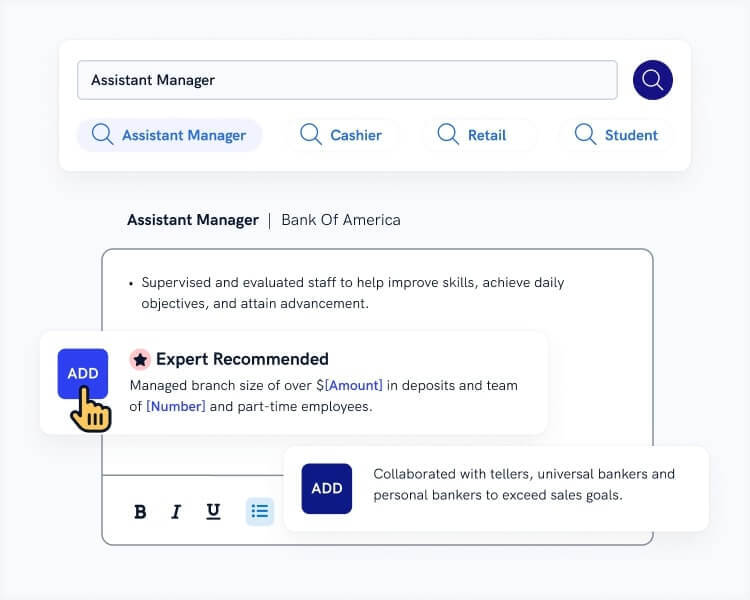
When you’re done, Zety’s Resume Checker will score your resume and show you exactly how to improve it.
Graduate School CV Examples
The following graduate school CV examples show how applicants at different degree levels and disciplines structure their academic experience. Each example highlights how to present education, research, skills, and achievements in a clear format tailored to specific programs.
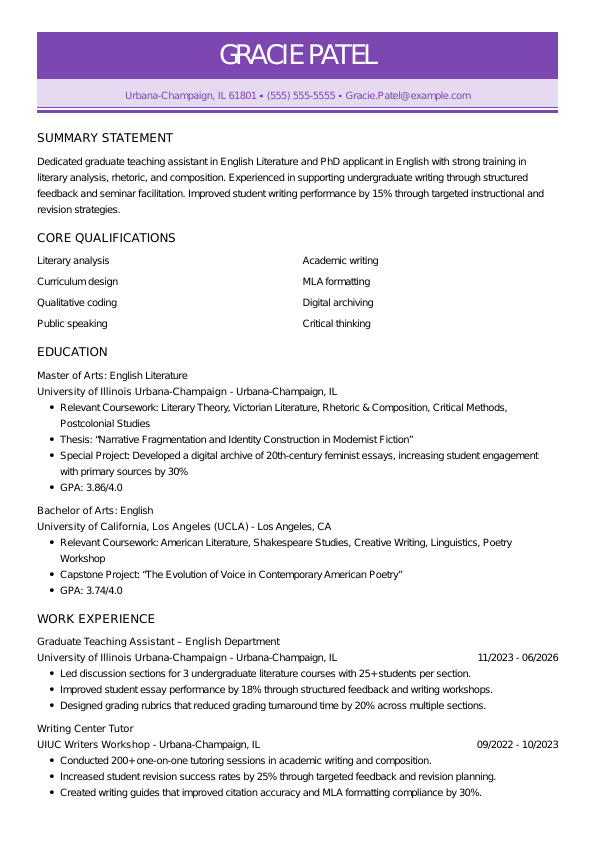
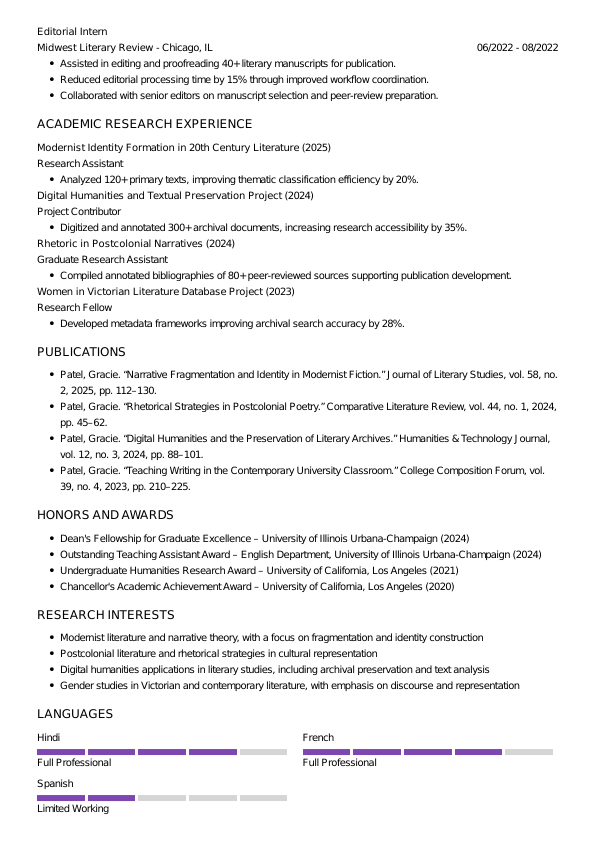
CV for an English PhD Program
This CV example demonstrates how to present advanced academic work in literature, including publications, teaching experience, research interests, and writing-focused achievements. It highlights how humanities candidates can structure scholarly experience for doctoral study.
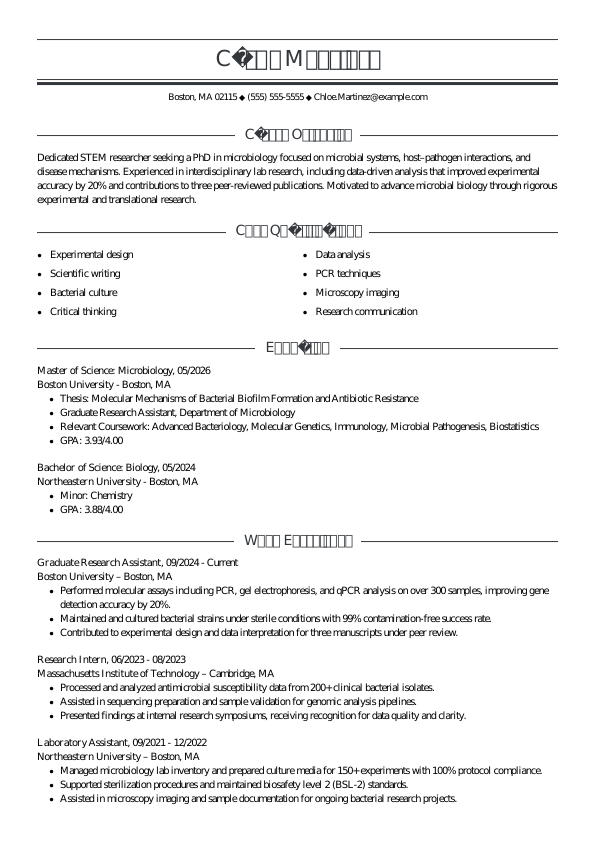
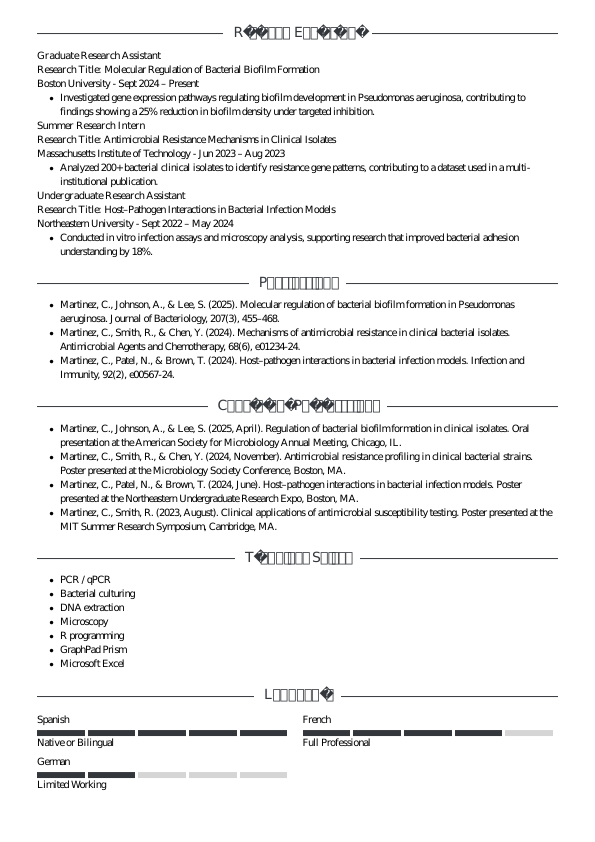
CV for a Microbiology PhD Program
This CV example shows how to emphasize laboratory research experience, technical skills, publications, and conference presentations. It’s designed to reflect the depth of scientific training expected in a microbiology PhD application.
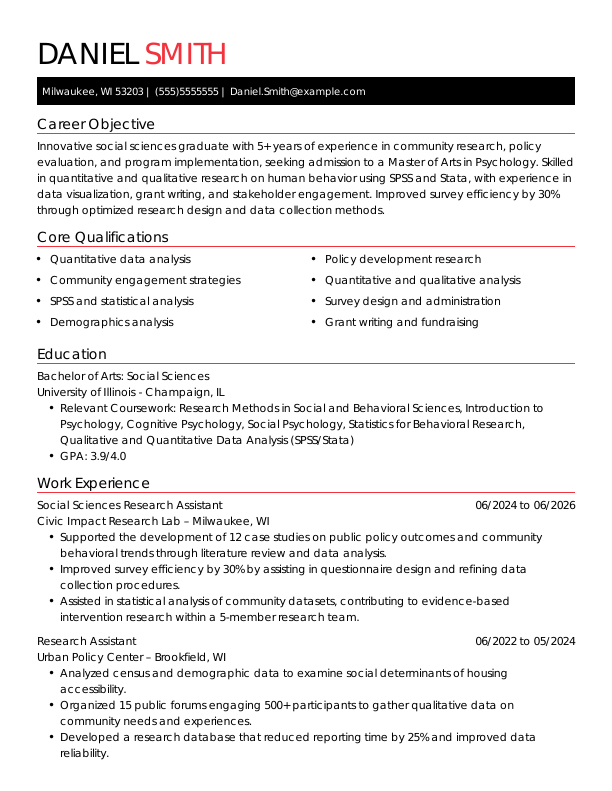
CV for a Master of Arts in Psychology
This CV example focuses on academic coursework, research exposure, internships, and applied experience in psychology. It illustrates how master’s applicants can present a balanced profile of academic preparation and practical experience.
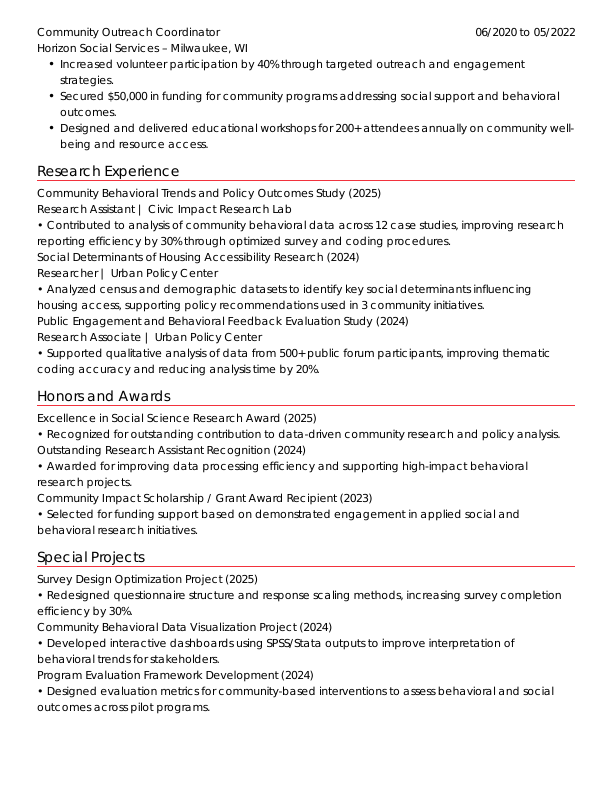
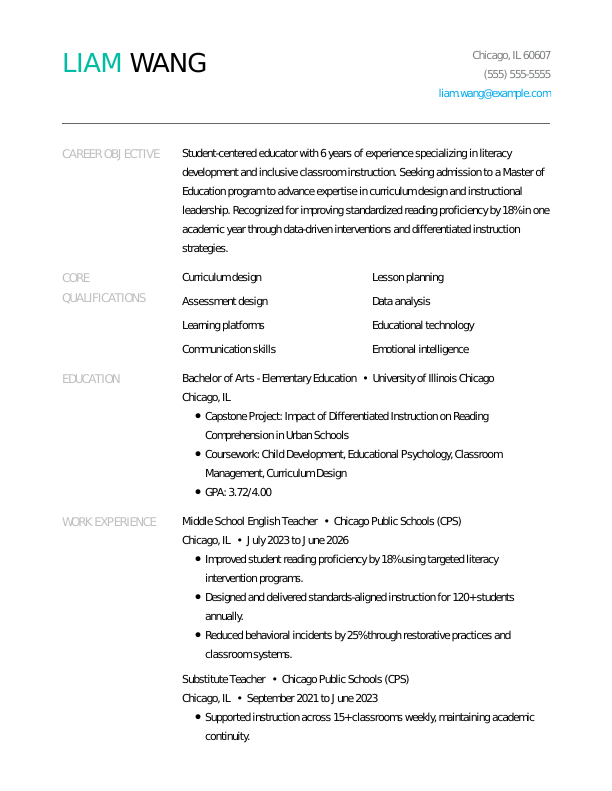
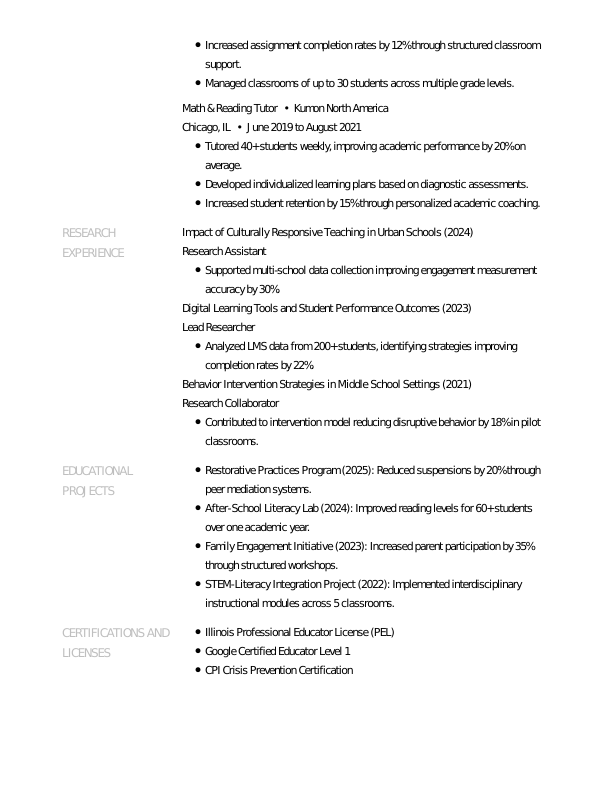
CV for a Master of Education (MEd)
This CV example highlights teaching experience, classroom practice, educational leadership, and relevant academic credentials. It shows how education-focused applicants can combine professional experience with academic qualifications in a clear, structured CV.
Tips for a Successful Graduate School CV
A strong graduate school CV does more than list your experience—it helps admissions committees quickly understand your academic focus, research readiness, and potential for success in advanced study.
Use these tips to refine your CV so it aligns with what graduate programs actually look for when reviewing applicants:
Key Tips
- Highlight transferable academic skills, such as research design, statistical analysis, and academic writing, rather than only listing job duties or general responsibilities.
- Whenever possible, quantify achievements by including numbers, percentages, hours, sample sizes, or project scope, such as “analyzed 200+ data samples.”
- Start each bullet point with strong action verbs, such as “conducted,” “analyzed,” “developed,” “investigated,” or “designed,” to communicate your role and impact.
- Include specific project or study titles for research and academic work so reviewers can quickly identify your subject focus and area of expertise.
- Incorporate keywords from the program description, such as methods, theories, or lab techniques, to optimize your CV for applicant tracking systems (ATS).
- Keep publication and presentation entries consistent in formatting, including posters, undergraduate work, and symposium contributions.
Common Graduate CV Mistakes to Avoid
A strong graduate school CV is just as much about what you leave out as what you include, since admissions committees prioritize clarity and academic focus when reviewing applications.
Avoiding these common mistakes can significantly improve how quickly and effectively your CV communicates your qualifications:
Common Mistakes
- Using vague bullet points that don’t clearly explain your specific role, methods, or measurable outcomes within a research or work context.
- Including unrelated work experience that doesn’t demonstrate transferable skills or relevance to your intended field of graduate study.
- Using inconsistent formatting across sections, especially in dates, headings, spacing, and publication or presentation entries throughout the CV.
- Overloading your CV with every activity or position, since prioritizing the most relevant experiences creates a stronger academic focus.
- Including personal storytelling or narrative language, since CVs should remain objective, factual, and achievement-focused throughout.
- Including references directly on your CV unless specifically requested, since most graduate programs collect references separately during the applicant process.
Key Takeaways
Your graduate school CV should make it easy for admissions committees to quickly understand who you are academically, what you’ve worked on, and why you’re a strong fit for their program.
✅ These key points bring everything together at a glance:
- A graduate school CV should prioritize academic, research, and scholarly experience over general work history.
- Clear structure, consistent formatting, and a focused academic narrative make it easier for admissions committees to evaluate your qualifications.
- Strong CVs use action verbs and measurable achievements to demonstrate impact and responsibility.
- Research experience, publications, and presentations are often the most influential sections in graduate admissions decisions.
- Each CV should be tailored to the specific program by emphasizing relevant skills, coursework, and research interests.
- Optional sections, such as awards, certifications, and activities, should only be included if they strengthen your academic profile.
Frequently Asked Questions
What format should a graduate school CV follow?
A graduate school CV should follow a clean, professional format that’s easy for admissions committees to scan. The most common approach is reverse-chronological order, where your most recent education and experience appear first.
Keep formatting consistent, use concise bullet points instead of paragraphs, and ensure spacing is uniform so your qualifications are easy to evaluate at a glance.
Are a CV and a resume the same?
No, a CV and a resume aren’t the same.
A CV is a detailed document that focuses on academic background, research experience, publications, and scholarly achievements. It’s typically used for graduate school and academic applications. A resume is shorter and more tailored to specific jobs, focusing on relevant work experience and skills for a particular role.
For graduate school applications, a CV is preferred because it provides a more comprehensive overview of your academic and research qualifications.
How can I make a graduate CV stand out?
You can make your graduate school CV stand out by using strong action verbs, quantifying research or academic contributions where possible, and including relevant keywords from the program description.
Admissions committees look for depth, clarity, and relevance rather than just a long list of activities. A focused CV that clearly connects your experience to your academic goals will be more competitive.
How long should a CV be for grad school?
A graduate school CV is typically two to three pages, depending on your level of academic, research, and professional experience. More advanced applicants with publications, presentations, and extensive research may naturally require additional space.
Focus on including only relevant information that supports your graduate application, especially education, research experience, and academic achievements.
Should I include my GPA on a graduate CV?
You should include your GPA on your graduate school CV if it’s strong or required by the program. A GPA of 3.5 or higher is typically worth listing because it strengthens your academic profile. If your GPA is lower or not requested, it’s usually better to omit it and focus instead on stronger indicators of performance, such as research experience and academic honors.
About Zety’s Editorial Process
This article has been reviewed by our editorial team to make sure it follows Zety’s editorial guidelines. We’re committed to sharing our expertise and giving you trustworthy career advice tailored to your needs. High-quality content is what brings over 40 million readers to our site every year. But we don’t stop there. Our team conducts original research to understand the job market better, and we pride ourselves on being quoted by top universities and prime media outlets from around the world.

Follow Zety as a preferred source in Google
Get more resume writing tips, career insights, and workforce trends in your personalized search experience. Learn more >

Share:


