














Table of Contents
Get more resume writing tips, career insights, and workforce trends in your personalized search experience.
If the offer sounds good, but the salary is not to your liking, should you give it up and let it go? Not really! You have to take a shot at negotiating what you desire, but you have to get it right not to lose the offer.
It can be tricky. But our guide will help you understand how to ace it. Read on and find out how to write a counter offer letter that will make you more satisfied!
This article will give you:
- Insights into what a counter offer letter is and when you should write it.
- Best tips about how to write a counter offer letter and keep the job offer.
- A counter offer letter template to fill out for best results.
- A salary negotiation counter offer letter sample to help you craft your own letter.
Need a backup plan? Keep applying till you find the ideal job. Make your life easier with our resume builder.
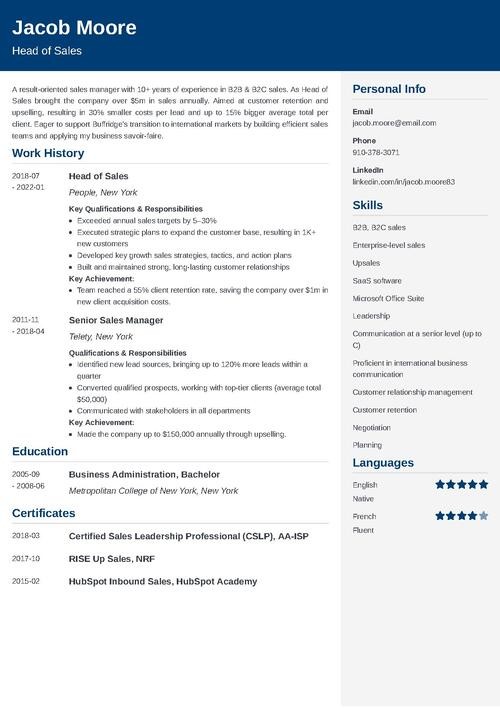
Sample resume made with our builder—See more resume examples here.
Looking for other useful guides? Find them below:
- Letter of Interest Examples
- Letter for Internal Position Sample
- Reference Letter Sample
- Motivation Letter Sample
- Letter of Appreciation Sample
- HR Statistics
- Job Search Statistics
- Gig Economy Statistics
What Is a Counter-Offer Letter?
A counter offer letter is a formal letter or an email expressing a job applicant’s desire to modify the initial offer from the potential employer. The candidate usually expresses their willingness to join the company but wants to negotiate the terms and conditions of the offer.
Many job searchers do not actually state their salary expectations clearly, because they think the salary’s fixed. However, over 60% of hiring managers actually leave some wiggle room, so trying to negotiate better conditions is a sound idea.
But a counter offer letter is not necessarily just a salary negotiation where a candidate is asking for higher compensation. It can also indicate your willingness to:
- Revise the original offer during a call/meeting.
- Discuss the additional benefits you’d like to have (like days off, travel reimbursements, etc.)
When to Send a Counter Offer Letter?
How do you know the situation calls for a counter offer letter? Here are some typical examples:
- The salary offered is lower than that in your previous position (and you’re not switching careers).
- The conditions don’t match the expenses and cost of living in the area.
- The position requires relocation, which presupposes extra expenditures.
- You’re convinced your expertise and job title call for higher pay. You have multiple job offers, and you wish to negotiate the best conditions for yourself.
The ultimate goal is to formulate a concise, reasonable, evidence-backed letter justifying your
request—which would result in the employer meeting your expectations (and the offer staying on the table, naturally).
Counter-Offer Letter Writing Tips
When you’re preparing your counter offer letter, you need to make sure you maintain a good relationship with the recruiter, retain the job opportunity, and get what you want. There are multiple ways to achieve that.
First and foremost, you need to find and collect the data to back you up:
- Research Glassdoor, LinkedIn, and similar job sites to find typical salary ranges for your position.
- Assemble an inventory of your top skills, certifications/licenses, and training that is sure to showcase your value to the potential employer.
- Justify your market value by presenting your outstanding results from previous jobs (backed with numbers).
- Mention any experience that involved responsibilities of a higher level of seniority—managing a team, onboarding new employees, designing a training program, etc.
Then, think of things you could ask for beyond the salary:
- Paid time off
- Sick days
- Other benefits (health insurance, language classes, sports cards, etc.)
- Higher commissions
- Reimbursements (internet and equipment costs if you work from home or travel expenses)
- Relocation coverage
And lastly, make sure you convey the right tone:
- Be confident but respectful—make requests, not demands.
- Get right to the point, be precise, and present your reasoning clearly.
- Show flexibility and willingness to negotiate.
All that’s left is to compose your counter-offer letter and wait for a response. Having the exchange documented in writing will ensure that the details are preserved and can be accessed at any time, if necessary.
How to Write a Counter Offer Letter + Template
According to data from Glassdoor, an average employee could be making up to 13% more if they negotiated their salary. Use their advice and write a good salary negotiation counter offer letter by following these steps:
- Thank the recruiter for their initial offer.
- State your concerns and express a desire to discuss matters further.
- Back up your concerns and present potential negotiation areas.
- Add a call to action, i.e., the preferred next step: a call, in-person meeting, or response containing a counter offer.
Here’s a template you can use as a guide to make sure you add all the right information:
Counter Offer Letter Template
[Your full name]
[Your address]
[Relevant contact details: phone #/email address]
[Date of writing, location]
[Name of hiring manager]
[Their title]
[Company name]
[Company address]
Dear [Name of hiring manager],
[An introduction where you express your appreciation of the offer presented to you.]
[Main body (1–2 paragraphs max), where you say you believe the conditions of the offer should be altered+prove why it’s the case.]
[A conclusion, where you reiterate your interest in the job+provide a call to action.]
Best regards,
[Your name]
Counter Offer Letter Example
Here’s a sample counter offer letter you can tailor to your particular situation or just use as a reference:
Jacob Moore
597 Geraldine Lane
Elmsford, NY 10523
646-294-1498
March 15, 2022, Elmsford
Cheryl Houston
Head of Human Resources, Buffridge
364 Station Street
Austin, TX 78701
Dear Ms. Houston,
I was very pleased to receive your job offer, and it was a delight to talk to you the other day.
While I believe my expertise perfectly matches what Buffridge is looking for, I have some reservations about the compensation package, which I’d be ready to negotiate.
Buffridge is currently planning a transition to international markets, and I have the knowledge and experience necessary to facilitate that transition. If done well, this is sure to bring a new revenue stream to the company and further strengthen the brand. However, this role comes with extra responsibilities that stretch beyond those of a Head of Sales domestically. For that reason, I believe it would be appropriate to discuss my pay in more detail.
I am very interested in joining your innovative team, and I am confident that we can set up a mutually beneficial working relationship where I can prove within several quarters the profit potential of branching out globally. Please, let me know if there is any room for negotiation, and if so, let’s schedule a call to discuss.
Thank you for your consideration.
Sincerely,
Jacob Moore
Once you’ve sent the letter, prepare for any potential outcomes. Map out your expectations and main negotiation points, and decide what the minimum is you won’t go below. This way, you’ll be ready for the conversation and will be able to make the best decision for your future career.
Decided to say no? Read our guide: How to Reject a Job Offer
Key Takeaways
Here’s how to write a counter offer letter:
- Do your research and find out about the usual pay/benefits that come with similar positions.
- Look back at your major accomplishments and expertise to find points to justify better compensation.
- Write a polite counter offer letter showing your interest in the position and your openness to negotiations.
- Include a call to action that will only reinforce that openness.
- Proofread!
- Be prepared for accepting, rejecting, or countering your counter offer letter.
About Zety’s Editorial Process
This article has been reviewed by our editorial team to make sure it follows Zety’s editorial guidelines. We’re committed to sharing our expertise and giving you trustworthy career advice tailored to your needs. High-quality content is what brings over 40 million readers to our site every year. But we don’t stop there. Our team conducts original research to understand the job market better, and we pride ourselves on being quoted by top universities and prime media outlets from around the world.
Sources

Follow Zety as a preferred source in Google
Get more resume writing tips, career insights, and workforce trends in your personalized search experience. Learn more >

Share:


