Table of Contents
Get more resume writing tips, career insights, and workforce trends in your personalized search experience.
Your resume tells employers about your skills and experience. But today, many hiring managers also check your LinkedIn profile before deciding whether or not to schedule an interview.
Adding your LinkedIn profile to your resume is a quick and easy way to help employers learn more about your experience, work history, and professional recommendations. But you need to do it the right way. A messy or outdated profile can hurt your chances rather than help them.
In this guide, you’ll learn exactly how to add LinkedIn to your resume step by step. You’ll also see examples, tips, and common mistakes to avoid so your resume looks more professional and stands out to employers in your industry.
Want to save time and have your resume ready in five minutes? Try Zety’s Resume Builder. It’s fast and easy to use. Plus, you’ll get ready-made content to add with one click.
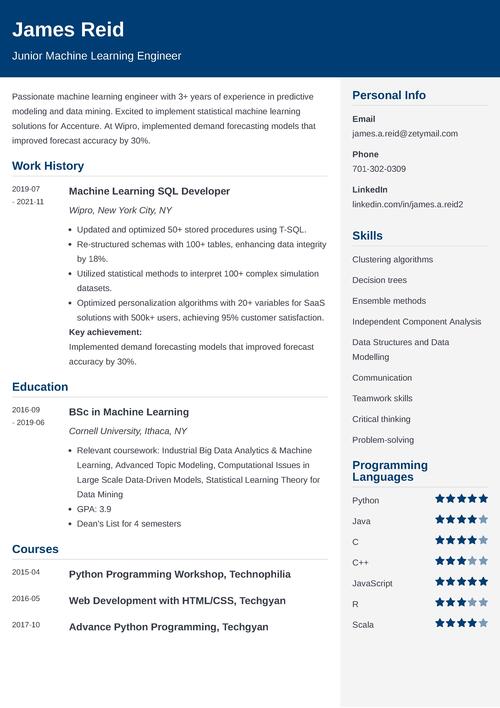
Sample resume made with our builder—see more resume examples here.
One of our users, Chris, had this to say:
You cannot go wrong with Zety. The company does best at enhancing your resume and helping market yourself better to land the job you love.
Should You Put LinkedIn on a Resume?
In most cases, yes, you should include your LinkedIn link on a resume if your profile is up to date. A strong LinkedIn profile offers employers a fuller picture of your background, including projects, recommendations, and accomplishments they may not see on your resume alone.
Find out exactly when you should and shouldn’t include LinkedIn on your resume below.
When to Include LinkedIn on Your Resume
You should include LinkedIn on your resume when your profile supports and improves the information already on your resume. An optimized LinkedIn profile can help employers see more of your work experience, skills, and professional background.
Add LinkedIn to your resume if:
- Your profile is fully updated.
- Your work history matches your resume.
- You have recommendations or endorsements.
- You want to share projects, certifications, or portfolios.
- You work in a professional or creative industry.
- You’re actively networking or building a personal brand.
For example, a graphic designer may use LinkedIn to showcase design projects, while a marketing professional may highlight certifications and work achievements.
When Not to Include LinkedIn on Your Resume
You should avoid adding LinkedIn if your profile looks incomplete or unprofessional. Hiring managers may compare your resume and LinkedIn profile, so any missing or outdated information can create confusion.
Do not include LinkedIn on your resume if:
- Your profile is incomplete.
- Your job history doesn’t match your resume.
- You have no profile photo or headline.
- Your profile contains spelling or grammar mistakes.
- You rarely use or update LinkedIn.
- Your content appears unprofessional.
Pro tip: Before adding your LinkedIn URL, spend a few minutes improving your profile. Updating your photo, experience, and skills helps you make a much better impression on employers.
How to Customize Your LinkedIn URL
Before including a LinkedIn URL on your resume, shorten the link to its most essential components.
By default, LinkedIn gives you a long web address with random numbers and letters, which doesn’t look very polished. Cleaning it up helps you present a more professional image and makes it easier to fit the link in your resume header.
For example:
Default URL
linkedin.com/in/elizabeth-muenzen-345a8b304
Custom URL
linkedin.com/in/elizabeth-muenzen
Follow these steps to customize your LinkedIn URL:
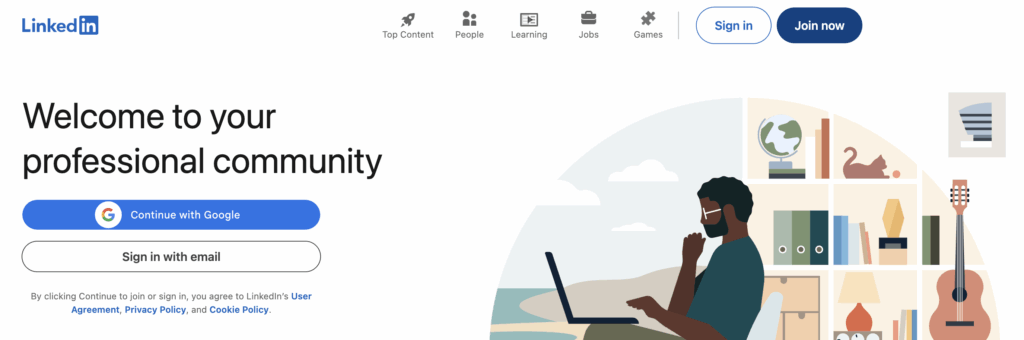
Step 1: Log In to Your LinkedIn Account
The first step is to sign in to your LinkedIn account to access your profile settings.
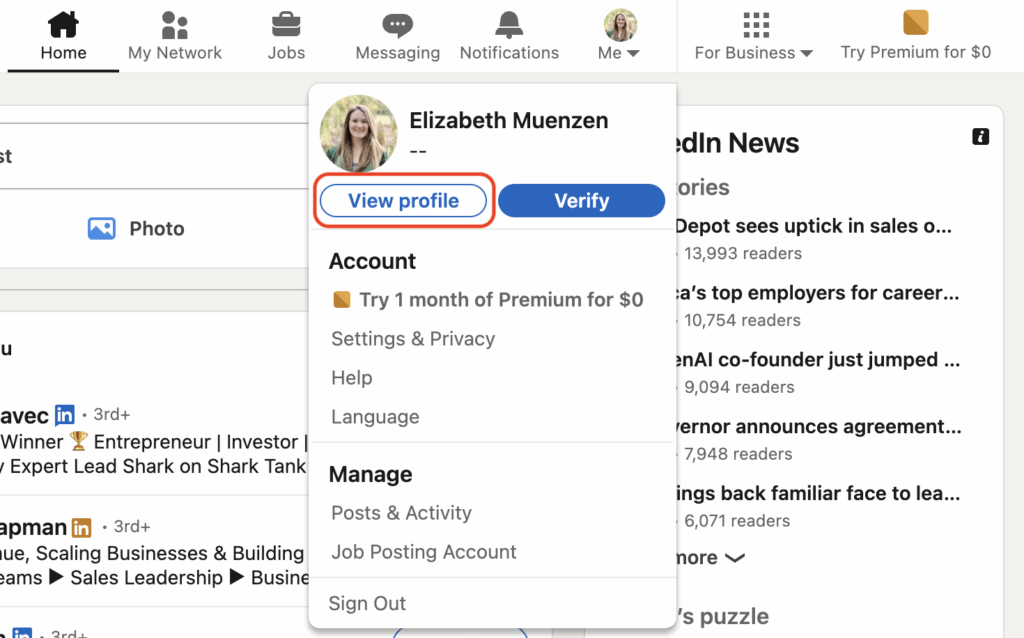
Step 2: Navigate to Your Profile
Click on the “Me” icon at the top right corner of your dashboard, then click “View profile.”
Step 3: Click to Access Your Profile URL
Find your public profile URL and click the pencil icon to open the editor.
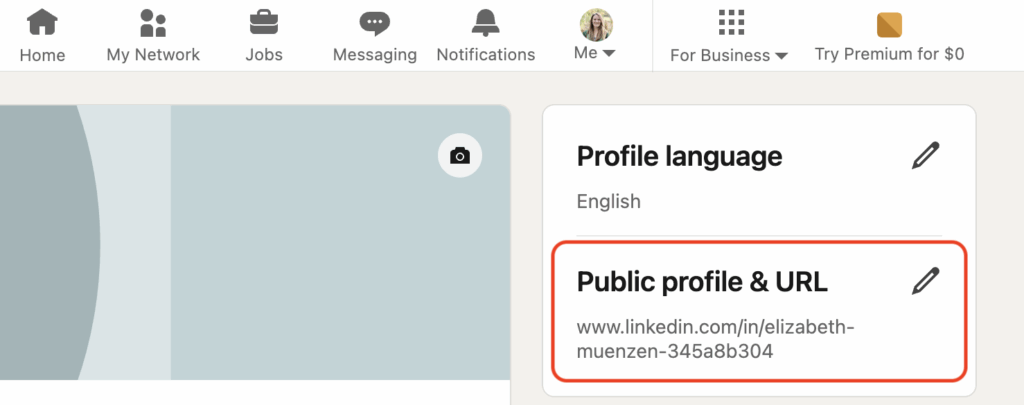
Step 4: Edit & Save Your Custom URL
Edit the portion of your custom URL following “www.linkedin.com/in/” by typing in a simple version of your name or professional brand. The goal is to make it clean and easy to read, like “jane-smith” instead of a long mix of numbers and random letters.
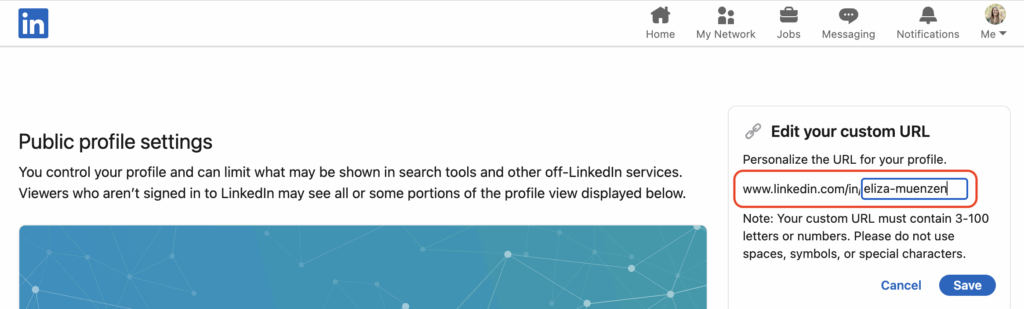
If your preferred URL is already taken, try small changes like adding your middle initial, full middle name, or your profession (e.g., “jane-a-smith” or “jane-smith-marketing”).
Keep it short, avoid special characters (like underscores or symbols), and stick to letters and hyphens only. Once you find an available version you like, click “Save” to confirm it.
Step 5: Copy Your Updated LinkedIn URL
Your updated LinkedIn URL is now ready to use on your resume and other professional materials. Go back to your profile and find your updated LinkedIn link in the “Public profile & URL” section. Click inside the URL box and highlight the full link, then copy it.
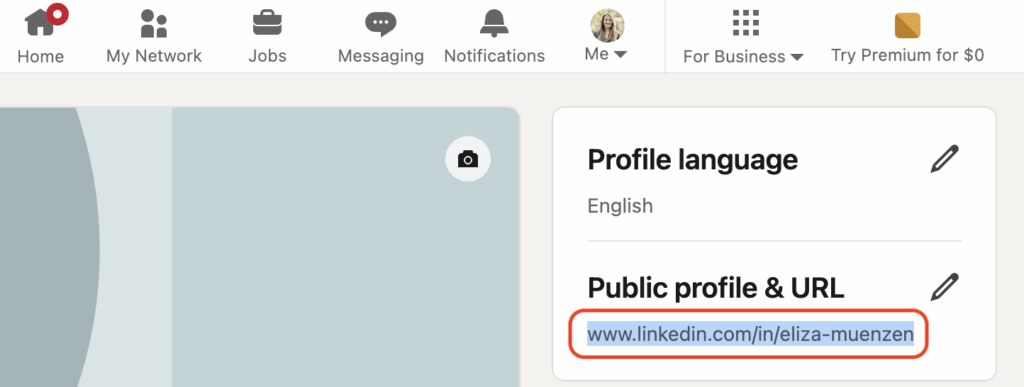
Pro tip: When you add the link to your resume or other application materials, remove “https://www.” to make it cleaner and more readable (e.g., “linkedin.com/in/yourname”). The link will still work the same either way.
Where Should You Put LinkedIn on a Resume?
Place your LinkedIn profile in the contact information section of your resume so employers can quickly find it. This keeps it visible, clean, and easy to scan alongside your email and phone number.
Make sure the link goes directly to your correct profile and is clickable in your resume. If you’re submitting a PDF, hyperlink the text so recruiters can click directly to your profile. Always double-check it before submitting your application.
Here are a few examples of how to put LinkedIn on a resume:
Option 1: In the Header of a Single-Column Resume
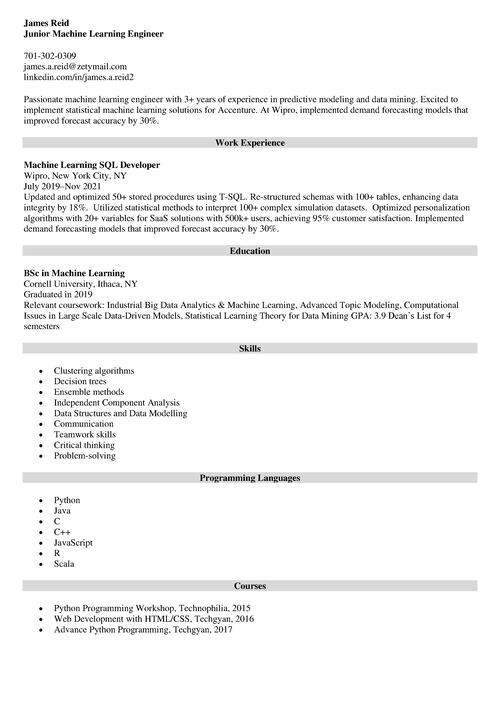
On a single-column resume, the best place to add your LinkedIn profile is in the header at the very top of the page.
Here’s an example:
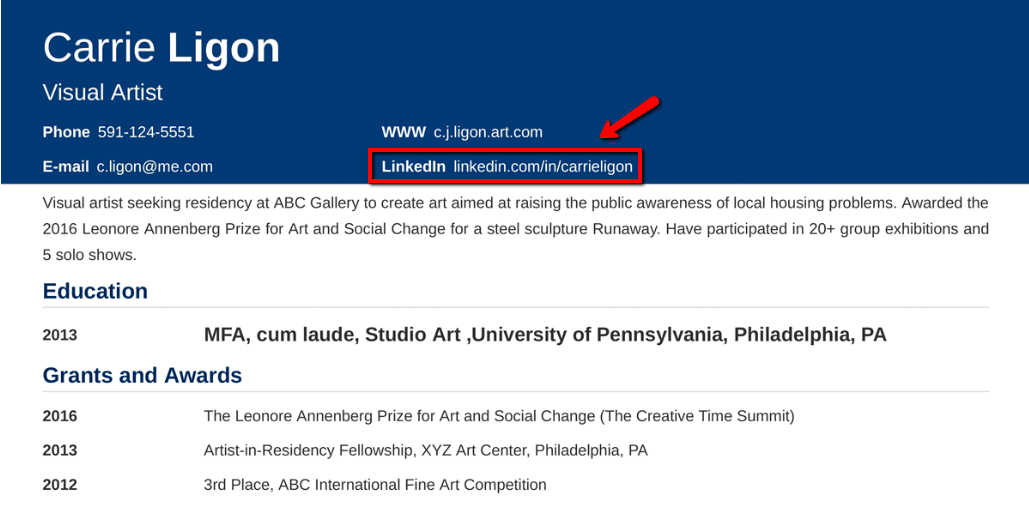
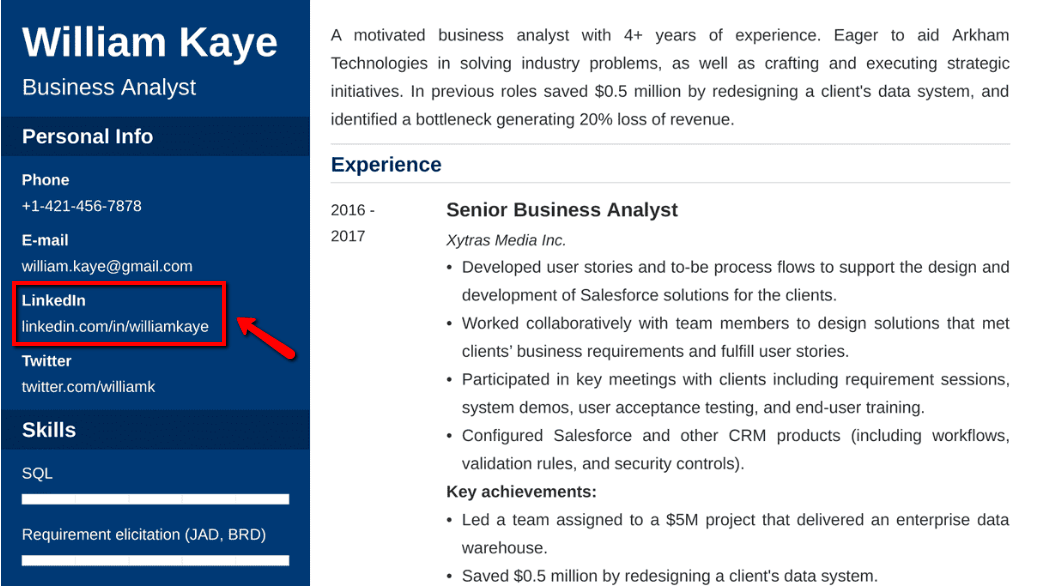
Option 2: On the Left Side of a Two-Column Resume
For a two-column resume, the left side is often used for contact details, skills, and quick information, making it the perfect place to add your LinkedIn profile.
For example:
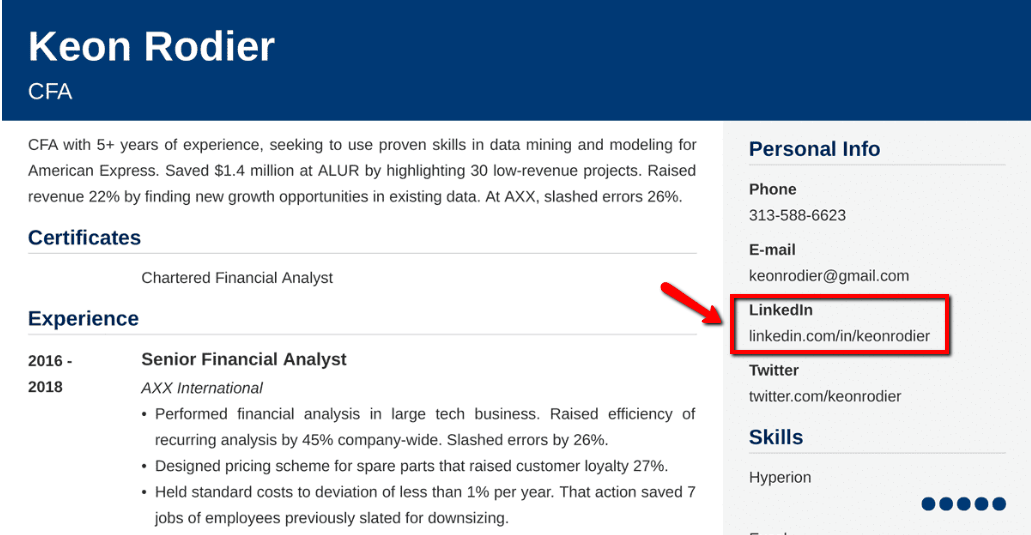
Option 3: On the Right Side of a Two-Column Resume
Here’s an example of a two-column resume with the contact information, including the candidate’s LinkedIn URL, on the right side:
Pro tip: Add your LinkedIn URL to more than just your resume. You can also include it in your cover letter header and email signature so employers can easily find your profile no matter where they’re reviewing your application.
Making a resume with our builder is incredibly simple. Follow our step-by-step guide, use ready-made content tailored to your job, and have a resume ready in minutes.
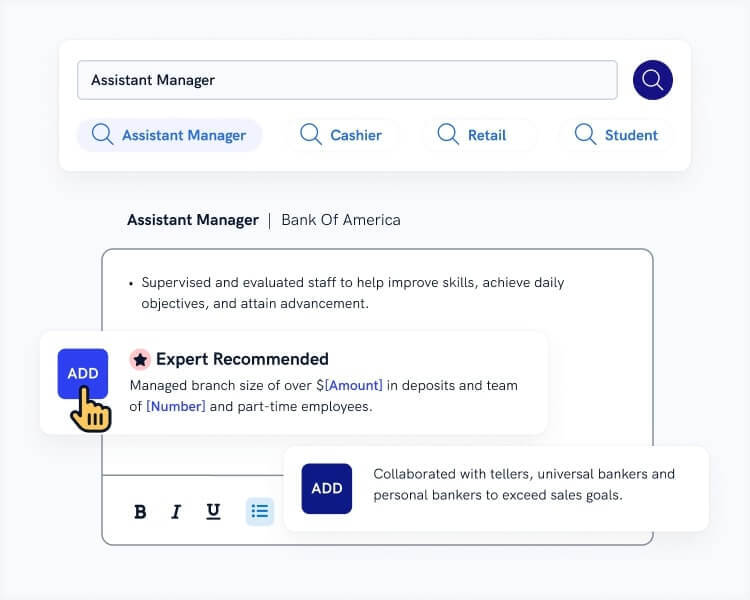
When you’re done, Zety’s ATS Resume Checker will score your resume and show you exactly how to improve it.
How to Strengthen Your LinkedIn Profile Before Adding It to Your Resume
A strong LinkedIn profile helps your resume work better by giving employers more details about your skills, experience, and personality. Before adding your LinkedIn link to your resume, make sure your profile is complete, clear, and matches the information you’re sending to employers.
Use a Professional Profile Photo
Your profile photo is the first thing people notice on LinkedIn, so make it clean and professional. Use a clear headshot where your face is easy to see, with good lighting and a simple background. Avoid group photos, filters, or casual selfies so employers can focus on you.
You should also add a simple, professional banner image at the top of your profile to reinforce your personal brand. A clean banner related to your industry or skills helps your profile look more complete and visually appealing.
Add a Punchy Headline
Your headline should quickly explain who you are and what you do, not just your job title. Instead of something generic like “Student” or “Marketing Assistant,” try something more specific like “Marketing Student | Social Media & Content Creation” or “Entry-Level Software Developer | Python & Web Development.” This helps you stand out in searches.
Pro tip: Your LinkedIn and resume headline don’t need to be identical, but they should be highly aligned. Your resume headline should be a tightly targeted, keyword-rich pitch for a specific role, while your LinkedIn headline acts as a broader, search-optimized billboard to attract recruiters.
Write a Clear “About” Section
Your “About” section is your short introduction, so keep it simple and easy to read. Explain who you are, what skills you have, and what kind of opportunities you’re looking for. Aim for a friendly, conversational tone so employers can quickly understand your background.
Ensure Your Experience Is Accurate
Make sure the job titles, dates, and responsibilities you have listed on LinkedIn are accurate and consistent with your resume. This builds trust with employers and avoids confusion during the hiring process. Even small differences can raise questions, so double-check carefully.
Add Projects, Skills, & Certifications
Use LinkedIn to show more than just job history. Add relevant projects, freelance work, certifications, and any other achievements that highlight your abilities. You can also list skills and get endorsements from others, which helps prove your strengths.
This is where LinkedIn can go beyond your resume by giving a fuller, more detailed picture of your qualifications, background, and experience that may not all fit on a one-page resume.
Ask for Recommendations
Recommendations are written testimonials that appear on your LinkedIn profile. You can ask teachers, managers, coworkers, or mentors to write a short note about your strengths, work ethic, or results you’ve achieved to show real proof of your skills, work ethic, and impact.
Key Takeaways
Adding your LinkedIn profile to your resume is a simple step that can make a big difference in your job search. Follow these key takeaways to ensure your LinkedIn profile supports your job applications in the best way possible:
- Add your LinkedIn profile to your resume if it’s complete, updated, and professional.
- Use a customized LinkedIn URL instead of the default one with random characters.
- Place your LinkedIn link in the contact section or header of your resume.
- Keep your resume and LinkedIn profile consistent, especially job titles and dates.
- Strengthen your profile with a clear photo, strong headline, and updated experience.
- Use LinkedIn to go beyond your resume by adding projects, skills, or recommendations.
Frequently Asked Questions
Is it good to add LinkedIn to a resume?
Yes, it’s good to add LinkedIn to a resume if your profile is complete, up to date, and professional. Adding your LinkedIn profile gives employers an easy way to learn more about your experience, skills, and achievements beyond what fits on your resume. It can also help you look more credible and improve your chances of getting noticed by recruiters.
How do I copy my LinkedIn URL?
You can copy your LinkedIn URL by navigating to your account, finding the section labeled “Public profile & URL,” and copying the custom URL listed there. You can also copy it directly from your browser’s address bar while you’re on your profile page. Once copied, you can remove “https://www.” before pasting it into your resume, cover letter, or email signature.
How do I export my LinkedIn profile to my resume?
LinkedIn allows you to download your profile as a PDF resume by going to your profile page, clicking “More,” and selecting “Save to PDF.” While this can help you create a basic resume quickly, you should still customize your resume for each job application rather than relying entirely on the exported version.
Is my LinkedIn URL the same as my profile link?
Yes, your LinkedIn URL and your profile link are the same thing. Both refer to the unique web address that takes someone directly to your LinkedIn profile. This is the link you see in your browser’s address bar when you open your profile or the one shown in the “Public profile & URL” section.
Should I upload my resume to LinkedIn?
You can upload your resume to LinkedIn, but it’s not required. Uploading it can make it easier for recruiters to quickly see your experience and qualifications when they visit your profile or when you apply for jobs through LinkedIn. Your LinkedIn profile should still be fully complete, however, since many employers rely on it more than the resume file you upload.
About Zety’s Editorial Process
This article has been reviewed by our editorial team to make sure it follows Zety’s editorial guidelines. We’re committed to sharing our expertise and giving you trustworthy career advice tailored to your needs. High-quality content is what brings over 40 million readers to our site every year. But we don’t stop there. Our team conducts original research to understand the job market better, and we pride ourselves on being quoted by top universities and prime media outlets from around the world.

Follow Zety as a preferred source in Google
Get more resume writing tips, career insights, and workforce trends in your personalized search experience. Learn more >

Share:


