Table of Contents
Get more resume writing tips, career insights, and workforce trends in your personalized search experience.
Not every career path fits neatly into a chronological timeline. Maybe you’ve changed industries, built valuable skills through different roles, or have employment gaps you’d rather not highlight front and center. That’s where a combination resume can make all the difference.
A combination resume includes the best aspects of both chronological and functional resume formats. For job seekers who want to emphasize accomplishments, transferable expertise, or career growth, this format offers a strategic advantage.
In this guide, we’ll explain what a combination resume is, when to use one, its key benefits and drawbacks, and how to create a compelling resume that captures recruiters’ attention and improves your chances of landing interviews.
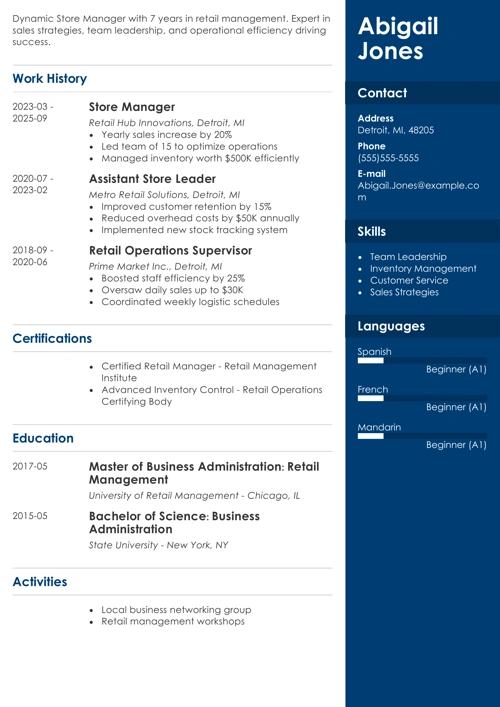
Want to save time and have your resume ready in five minutes? Try Zety’s Resume Builder. It’s fast and easy to use. Plus, you’ll get ready-made content to add with one click.
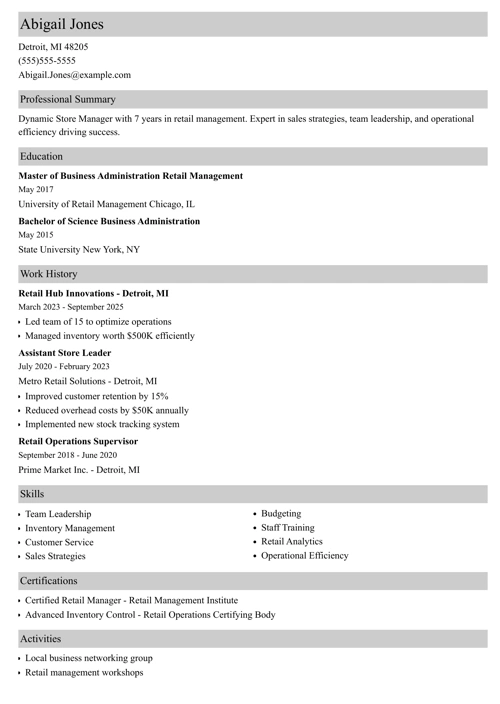
See more professional resume examples made with our builder.
One of our users, Chris, had this to say:
You cannot go wrong with Zety. The company does best at enhancing your resume and helping market yourself better to land the job you love.
What Is a Combination Resume?
A combination resume is a resume format that blends elements of both chronological and functional resumes. It highlights your skills and qualifications at the top while also providing a detailed work history in reverse-chronological order. This structure allows recruiters to quickly identify your most relevant qualifications before reviewing your employment timeline.
Also called a hybrid resume, this format is used by job seekers who want to showcase relevant skills and accomplishments while still demonstrating a strong employment record. It’s commonly used by professionals with varied experience, individuals changing careers, or those whose skills are more important than their job titles.
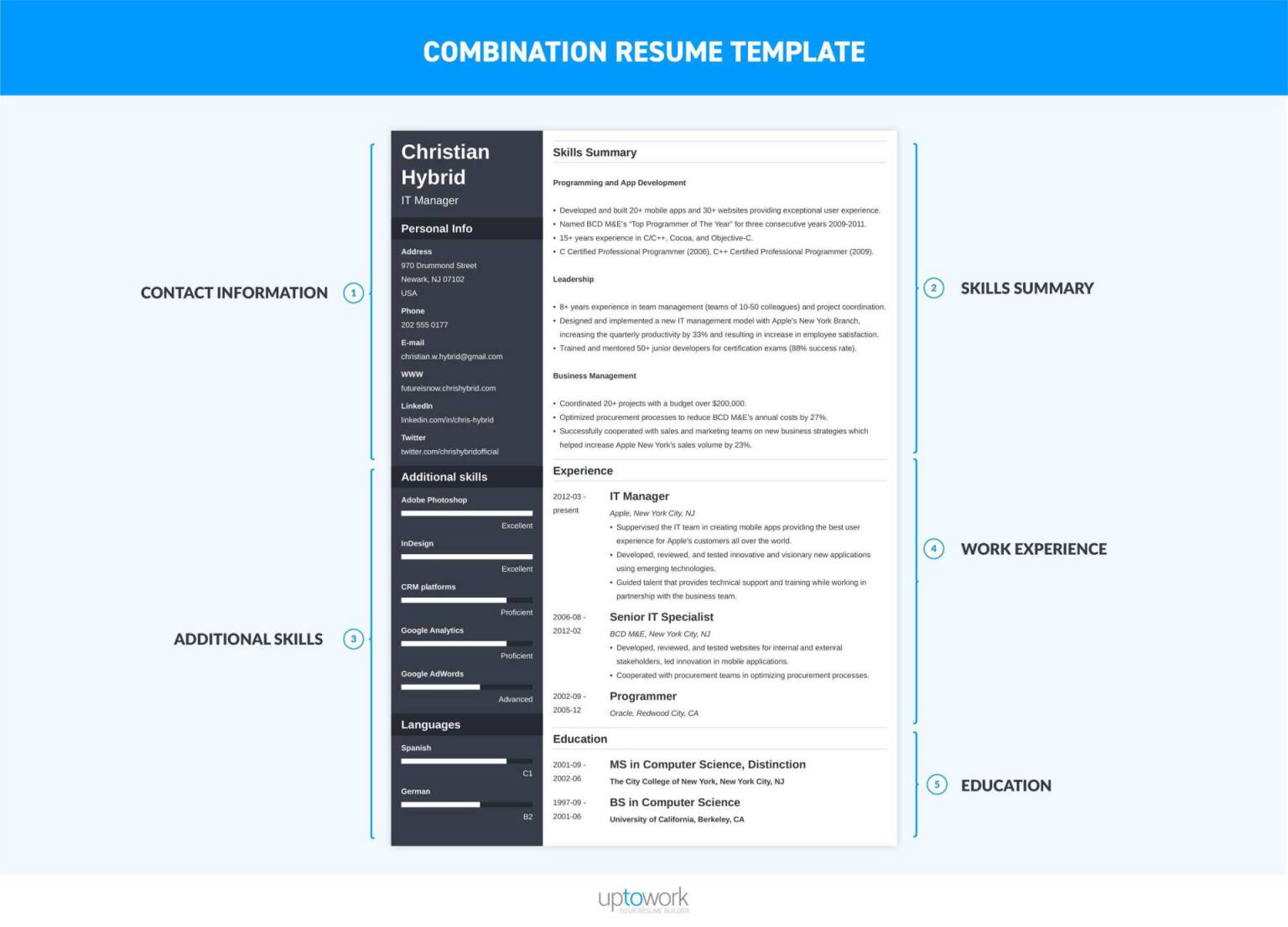
A typical combination resume includes contact information, a skills summary organized by category, work experience in reverse-chronological order, and education.
Here’s an example:
When Should You Use a Combination Resume?
Use a combination resume when you want to highlight both your professional skills and your work experience. By placing key qualifications near the top of the document while still including a detailed employment history, this format helps employers quickly understand what you bring to the role, even when your experience is varied or nonlinear.
Consider using a combination resume if:
- You’re changing careers. You can highlight transferable skills at the top, showing employers how your experience applies to a new industry.
- You’re a student or recent grad with relevant projects or internship experience. It allows you to emphasize coursework, projects, internships, and transferable skills when your formal work experience is limited.
- You’re reentering the workforce. If you have employment gaps, this format shifts the focus to what you can do (your skills) rather than when you did it (your timeline).
- You have specialized technical skills. It’s especially effective for IT, engineering, or medical positions where specific hard skills or certifications are a primary hiring consideration.
- Your job titles don’t reflect your abilities. If your previous roles don’t fully match the position you want, this format helps bridge the gap by leading with relevant skills.
💡Pro tip: If you have a strong, consistent work history that closely aligns with the job you’re applying for, a chronological resume is often the better choice. Recruiters are most familiar with this format, and it makes it easy for them to review your career progression and experience.
Pros & Cons of Using a Combination Resume
A combination resume offers the advantage of highlighting both your skills and work experience, but it can be longer and more complex than other resume formats. Understanding the advantages and disadvantages of this format can help you determine whether it’s right for you.
Here’s a breakdown of the pros and cons to consider:
Pros
- Highlights key skills upfront: Recruiters can quickly see your most relevant qualifications.
- Showcases work experience: Unlike a functional resume, it still provides a clear employment timeline.
- Works well for career changers: Transferable skills can be emphasized without hiding previous roles.
- Demonstrates versatility: Ideal for professionals with a broad range of competencies and accomplishments.
- Supports senior-level applications: Allows experienced candidates to feature leadership, technical, and industry-specific expertise.
Cons
- Can become lengthy: Including both a skills section and a detailed work history may make the resume longer than necessary.
- Requires careful organization: Poor formatting can make the document appear cluttered or repetitive.
- May not suit entry-level candidates: Those with limited experience may struggle to fill both sections effectively.
- Can repeat information: Skills highlighted at the top may also appear within job descriptions, creating redundancy.
- Not always preferred by recruiters: Some hiring managers favor the simplicity of a traditional chronological resume.
How to Write a Combination Resume
Writing a combination resume involves showcasing your most relevant skills first and then supporting those qualifications with a detailed work history. The goal is to help employers quickly see what you can do while still providing the career timeline they expect.
Follow these steps to write a resume using the combination format:
Start With Your Contact Information
Create a resume header that includes your full name, phone number, email address, location (city and state), and optional links such as your LinkedIn profile or online portfolio.
On a combination resume, the header can be styled in different ways depending on your template—centered at the top, or placed in a left or right column in a two-column layout to save space and improve visual hierarchy.
Here’s an example:
Jane Smith
(555) 123-4567
jane.smith@email.com
Chicago, IL
linkedin.com/in/janesmith
janesmithportfolio.com
💡Pro tip: Use a professional email address that includes your name, and avoid nicknames or outdated domains that may weaken your first impression.
Write a Strong Professional Summary
Write a professional summary that briefly highlights your experience, key skills, and most relevant qualifications in two to four sentences. Position it near the top of your combination resume so employers immediately understand your background and what you bring to the role.
A strong professional summary should include:
- Your job title or professional identity
- Years of relevant experience
- Core skills or areas of expertise
- One or two key strengths or accomplishments
Here’s an example:
Results-driven marketing specialist with 6+ years of experience in digital marketing, content strategy, and campaign optimization. Skilled in SEO, paid media, and analytics, with a proven track record of increasing website traffic by 40% and improving conversion rates through data-driven campaigns. Recognized for developing and executing high-impact marketing strategies that drive business growth and support long-term organizational success.
Summarize Your Skills & Qualifications
Summarize your skills and qualifications in a structured, category-based format that highlights your strongest abilities alongside measurable achievements.
In a combination resume, this section is a core element because it appears near the top and provides employers with an immediate, high-impact snapshot of what you can do before they review your full work history.
Unlike a traditional bullet list of skills, this format groups your expertise into clear themes such as technical abilities, leadership experience, or business impact.
Here’s an example:
Skills
Programming & App Development
- Developed and built 20+ mobile apps and 30+ websites, providing exceptional user experience.
- Named BCD M&E’s “Top Programmer of the Year” for three consecutive years (2021–2023).
- 15+ years experience in C/C++, Cocoa, and Objective-C.
- C Certified Professional Programmer (2024), C++ Certified Professional Programmer (2025).
Leadership
- 8+ years of experience in team management (teams of 10–50 colleagues) and project coordination.
- Designed and implemented a new IT management model with Apple’s New York Branch, increasing quarterly productivity by 33%.
- Trained and mentored 50+ junior developers to help them prepare for certification exams (88% success rate).
Business Management
- Coordinated 20+ projects with a budget over $200,000.
- Optimized procurement processes to reduce BCD M&E’s annual costs by 27%.
- Successfully cooperated with sales and marketing teams on new business strategies, which helped increase Apple New York’s sales volume by 23%.
💡Pro tip: Each category should include measurable accomplishments that demonstrate how you’ve applied your skills in real situations. This helps hiring managers quickly connect your capabilities to job requirements while reinforcing your credibility through evidence.
Create an Additional Skills Section (Optional)
Only add a separate skills section if it adds new information (e.g., extra abilities, tools, or competencies) that doesn’t already appear in your main skills section or qualifications summary. Otherwise, it can become repetitive.
This section should include:
- Secondary technical skills or tools
- Additional software or platforms
- Languages (spoken or programming, if relevant)
- Soft skills that support your role (e.g., adaptability, teamwork)
- Industry-specific knowledge or niche abilities
Here’s an example:
Skills
- Agile and Scrum Methodologies
- Git, GitHub, and version control systems
- UI/UX design principles
- Technical writing and documentation
- Spanish (conversational)
- Cross-functional collaboration
- Problem-solving and adaptability
💡Pro tip: Use this additional skills section to naturally incorporate important keywords from the job description, such as tools, certifications, and technical competencies. This helps improve your resume’s compatibility with applicant tracking systems (ATS) while still keeping your skills organized and easy for recruiters to scan.
Add Your Professional Experience
Add your professional experience section in reverse-chronological order, starting with your most recent role. In a combination resume, this section works alongside your skills summary by showing how you’ve applied your abilities in real roles, helping employers understand the impact and scope of your work history.
For each position, include your job title, company name, location (if relevant), and dates of employment, followed by concise, results-focused bullet points. Each bullet should emphasize achievements, contributions, and measurable outcomes rather than basic job duties.
Start bullet points with strong action verbs (e.g., “developed,” “led,” “improved”) to clearly communicate impact and make your experience more dynamic and results-oriented.
Here’s an example:
Work Experience
Software Engineer
CloudNova Technologies | Austin, TX
2021–Present
- Develop and maintain scalable cloud-based applications serving 500K+ users using Java, Python, and AWS services.
- Improve back-end system performance by 38% through API optimization and database restructuring.
- Collaborated with product, design, and QA teams to deliver three major platform releases ahead of schedule.
- Reduced infrastructure costs by 22% by migrating legacy services to a cloud-native architecture.
Include Your Education
Include an education section to showcase your academic background and any relevant degrees or training you have. Even when employers focus primarily on experience, education helps demonstrate that you meet baseline requirements for many positions.
Place this section toward the bottom of your resume, reinforcing your expertise after your skills and experience have been established. List your education in reverse-chronological order and include:
- Degree earned (or program of study)
- School or university name
- Location (optional)
- Graduation year (optional, especially if you have extensive experience)
- Relevant coursework, honors, or academic achievements
Here’s an example:
Education
Bachelor of Science in Computer Science
University of Central Florida | Orlando, FL | May 2023
- magna cum laude
- Relevant coursework: Data Structures, Software Engineering, Database Systems
Add Certifications & Additional Sections
Add certifications and additional sections to strengthen your combination resume by showcasing specialized training, professional credentials, and relevant accomplishments that don’t fit neatly into your main skills or experience sections. These sections help reinforce your expertise and demonstrate continued professional development.
Here’s an example certifications section:
Certifications
- AWS Certified Solutions Architect – Associate (Amazon Web Services, 2022)
- Google Data Analytics Professional Certificate (Google, 2021)
- Certified ScrumMaster (CSM) – Scrum Alliance, 2020
- CompTIA Security+ (CompTIA, 2019)
Making a resume with our builder is incredibly simple. Follow our step-by-step guide, use ready-made content tailored to your job, and have a resume ready in minutes.
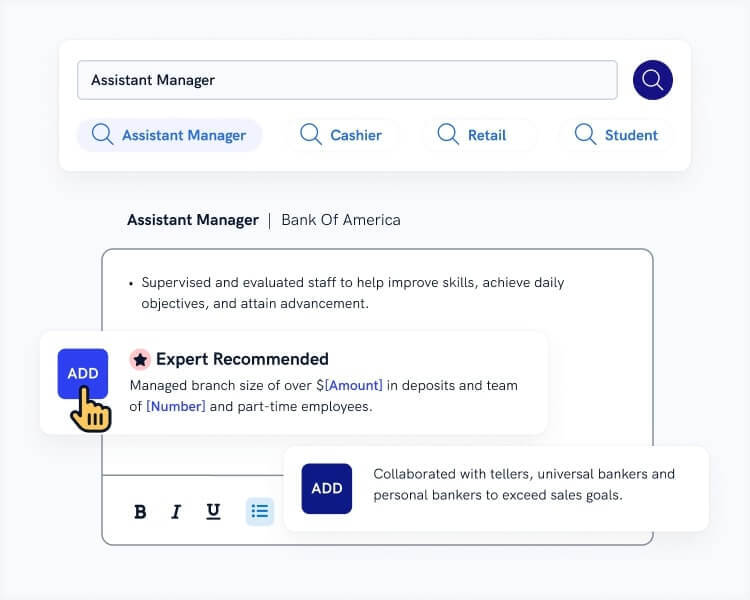
When you’re done, Zety’s Resume Checker will score your resume and show you exactly how to improve it.
Combination Resume Template
Use this combination resume template to highlight your qualifications first while still presenting a clear work history.
[Full Name]
[Phone Number] | [Professional Email] | [City, State] | [LinkedIn] | [Portfolio]
Professional Summary
[Profession or job title] with [X]+ years of experience in [industry or specialty]. Skilled in [key skill], [key skill], and [key skill], with a proven track record of [key achievement]. Committed to delivering [value or outcome] and helping organizations achieve [business goal].
Skills & Qualifications
- [Technical skill]
- [Technical skill]
- [Industry knowledge]
- [Software or tool]
- [Certification or credential]
- [Soft skill]
Professional Experience
[Job Title]
[Company Name – Location]
[Dates of Employment]
- [Action-oriented bullet point with measurable outcome]
- [Action-oriented bullet point with measurable outcome]
- [Action-oriented bullet point with measurable outcome]
[Job Title]
[Company Name – Location]
[Dates of Employment]
- [Action-oriented bullet point with measurable outcome]
- [Action-oriented bullet point with measurable outcome]
- [Action-oriented bullet point with measurable outcome]
Education
[Degree Earned]
[School Name – Location]
[Graduation Year (optional)]
- [Relevant honors, coursework, or academic highlights]
Certifications (Optional)
- [Certification Name – Issuing Organization (Year)]
- [Certification Name – Issuing Organization (Year)]
Additional Sections (Optional)
[Include only if relevant: volunteer work, awards, publications, languages, or professional memberships]
Combination Resume Examples for Popular Jobs
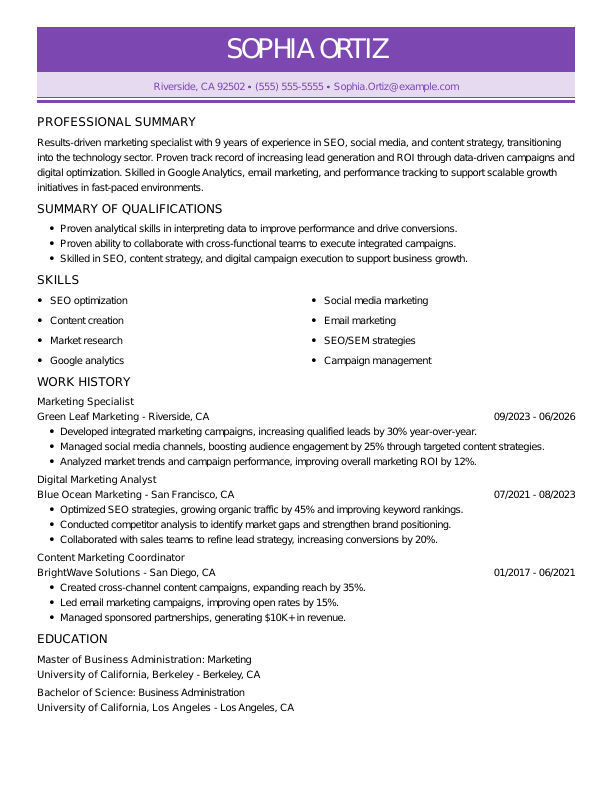
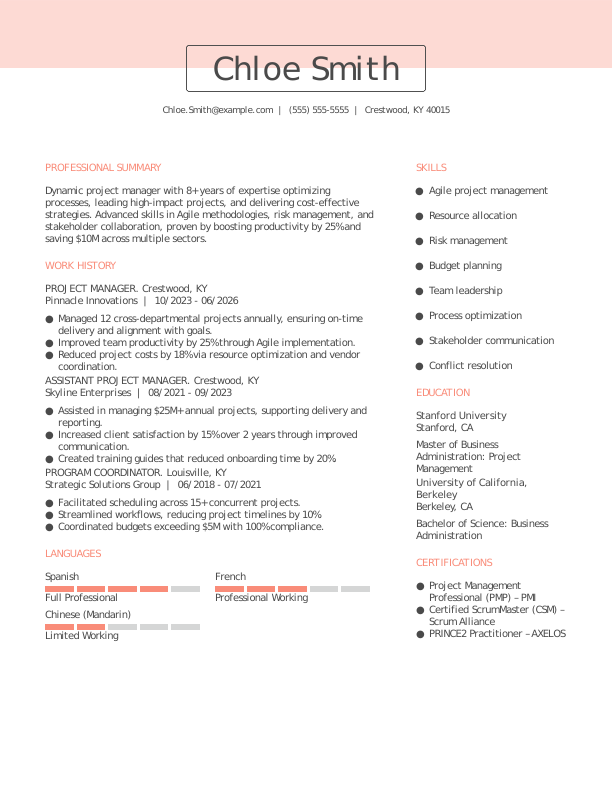
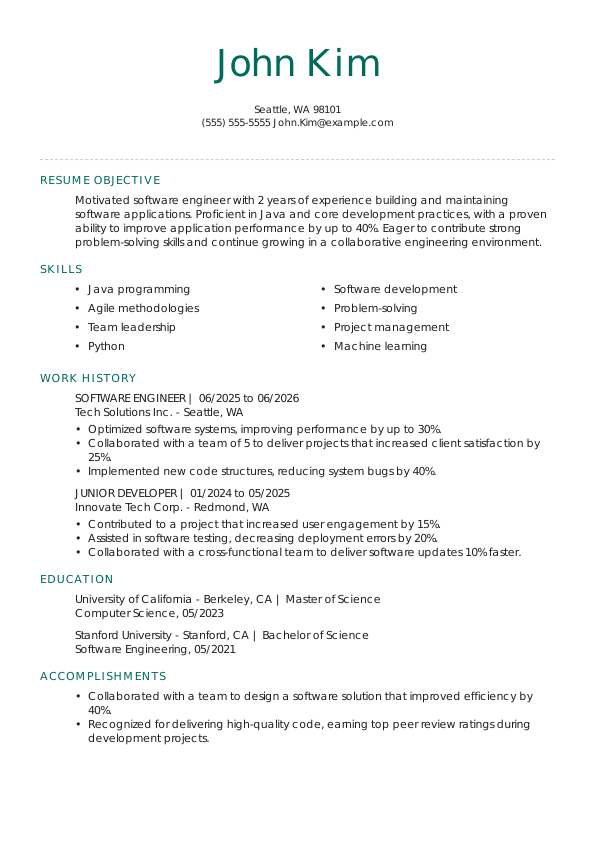
The combination resumes below are built on our professional resume templates and adapted for popular job titles. You can customize them to add your experience or choose a different template that matches your style and industry.
Marketing Specialist Combination Resume
Project Manager Combination Resume
Software Engineer Combination Resume
Key Takeaways
A combination resume helps you present a clearer, more strategic snapshot of your qualifications by putting your strongest skills front and center while still backing them up with a structured work history. This format is designed to quickly communicate value to employers by blending what you can do with what you’ve already accomplished in your career.
✅ Here are a few key takeaways to remember while you craft your resume:
- A combination resume highlights both skills and work experience in a single, balanced format that improves overall presentation.
- It places key qualifications near the top of the document so recruiters can quickly identify your most relevant strengths.
- It’s especially effective for career changers, experienced professionals, and candidates in technical or specialized fields.
- Skills are typically grouped into categories and supported by measurable achievements that demonstrate real-world impact.
- Work experience is still included in reverse-chronological order to maintain clarity and establish credibility in your field.
- The combination format should always be tailored to match the specific requirements and keywords of the job description.
- Strong action verbs and quantifiable results improve readability while making accomplishments more compelling and impactful.
Frequently Asked Questions
Is a combination resume ATS-friendly?
A combination resume is ATS-friendly when it uses clean formatting and clear, standard section headings that ATS software can easily read. Modern software can read combination resumes effectively as long as you avoid tables, graphics, text boxes, and other complex formatting.
To create an ATS-friendly resume and improve compatibility, keep formatting simple and consistent throughout the document. Incorporate keywords from the job description into both the skills and experience sections.
What are the disadvantages of a combined resume?
A combined resume can make your application more complex and harder to scan if it’s not well-organized. It may become longer than other formats because it includes both a detailed skills section and a full work history, which can overwhelm recruiters.
Combination resumes can also lead to repetition between skills and experience sections, which may not be ideal for candidates with straightforward career paths that already clearly demonstrate their qualifications.
What is the difference between chronological and combination resumes?
A chronological resume focuses primarily on your work history, listing jobs in reverse-chronological order to emphasize career progression and recent experience.
A combination resume, on the other hand, starts with a skills-based section that highlights your key qualifications first, followed by a chronological work history. This makes the combination format more flexible for showcasing skills while still providing a clear employment timeline.
What is a red flag on a resume?
A red flag on a resume is any detail that may raise concerns for employers about a candidate’s reliability, qualifications, or professionalism.
Common examples include unexplained employment gaps, frequent job changes, inconsistent job titles or dates, spelling and grammar errors, and vague or exaggerated accomplishments. These issues can make recruiters question the accuracy or credibility of the application.
What type of resume do employers prefer?
Employers typically prefer a chronological resume because it clearly shows your work history and career progression in an easy-to-scan format. Since recruiters often spend only a few seconds reviewing each resume, a chronological layout can make it easier to quickly evaluate your experience.
Many employers also accept combination resumes if they’re well-structured and highlight relevant skills alongside experience. The best choice depends on the role, but employers value clarity, relevance, and consistency most.
About Zety’s Editorial Process
This article has been reviewed by our editorial team to make sure it follows Zety’s editorial guidelines. We’re committed to sharing our expertise and giving you trustworthy career advice tailored to your needs. High-quality content is what brings over 40 million readers to our site every year. But we don’t stop there. Our team conducts original research to understand the job market better, and we pride ourselves on being quoted by top universities and prime media outlets from around the world.

Follow Zety as a preferred source in Google
Get more resume writing tips, career insights, and workforce trends in your personalized search experience. Learn more >

Share:


