![Audio Engineer Resume Sample [Also Live Sound Production]](https://cdn-images.zety.com/pages/audio-engineer-resume-example-ztus-cta-02.webp)
Table of Contents
Get more resume writing tips, career insights, and workforce trends in your personalized search experience.
As an audio engineer, you’re the expert at finding the perfect balance – but does your resume strike the right chord with hiring managers? Together, we’ll create an audio engineer resume highlighting your expertise like a chart-topping hit, ensuring you land a spot on the A-list of audio professionals.
Let’s amp up your career and rock your job search!
This guide will show you:
- An audio engineer resume example better than 9 out of 10 other resumes.
- How to write an audio engineer resume that will land you more interviews.
- Tips and examples of how to put skills and achievements on an audio engineer resume.
- How to describe your experience on a resume for an audio engineer to get any job you want.
Looking for a quick way to build a professional resume? Give our smart Resume Builder a try for a fast and simple experience. You’ll also benefit from expert-designed content available with one click. Find the perfect resume template and create your resume here.
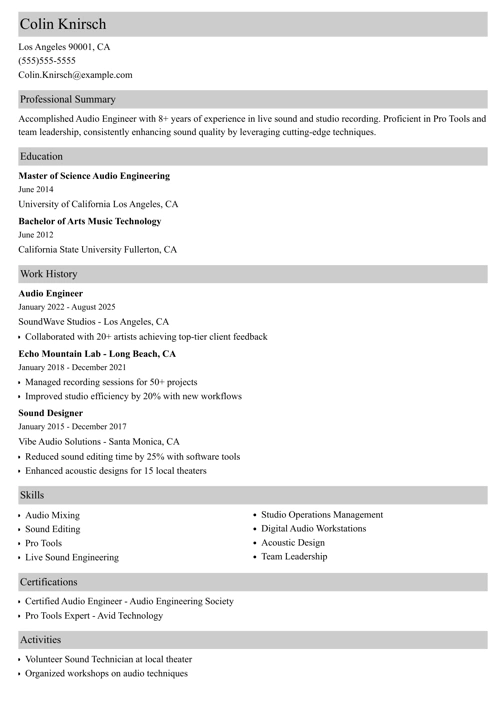
Sample resume made with our builder—See more resume examples here.
One of our users, Brittanya, had this to say:
Zety really helped me create the best resume possible. It pointed out how things could be better on my existing resume and suggested many things to be re-worded or removed.
Not fully settled on writing an audio engineer resume? See our other guides:
- Music Resume
- DJ Resume
- Event Planner Resume
- Video Editor Resume
- Videographer Resume
- Video Producer Resume
- Production Coordinator Resume
- Animator Resume
- Theater Resume
- Best Resume Examples
Audio Engineer Resume Sample
Colin Knirsch, Audio Engineer
colin.q.knirsch@gmail.com
linkedin.com/in/colinqknirsch
615-780-2747
Professional Summary
Prolific audio engineer & CEA with 8+ years of experience, skilled in live music production and cabling/patching. Seeking to deliver production excellence for IryDiry Nation. At School of Blues, provided audio engineering for 200+ live shows in a 1,000-seat venue. Written up in Venues Now magazine as one of the best 30 audio engineers on the East Coast.
Work Experience
Audio Engineer
School of Blues
June 2013–May 2019
- Handled setup and tear-down of audio equipment for 200+ live shows in a venue with 1,000 seats.
- Patched and placed all instruments, microphones, and monitors for bands with 5 to 30 members.
- Featured in an article about the best 30 audio engineers on the East Coast by Venues Now magazine.
- Did sound for Davy Knowles, Shemekia Copeland and dozens of other big-name blues acts. Danielle Zito said she hasn’t worked with a more professional engineer.
Assistant Audio Engineer
Watertown Roadhouse
Jan 2011–May 2013
- Worked as assistant audio engineer in 300-guest music venue 2 nights a week.
- Created and produced recordings of live acts with Avid Pro Tools.
Education
2007–2011 Belmont University
Bachelor of Arts With Major in Music
- Excelled in audio engineering coursework.
- Mixed live audio for commencement speaker Barack Obama.
Skills
- Hard skills: Live music mixing, patching, setup & tear-down, Avid Pro Tools
- Soft skills: Interpersonal skills, collaboration, communication, problem solving
Activities
Volunteer audio engineer, Freepeople Restaurant
Walk homeless dogs 1x per week at the Parton County Animal Shelter
Here’s how to write an audio engineer resume that gets jobs:
1. Use the Best Audio Engineer Resume Format
Audio engineers, also called recording engineers or sound engineers, manage sound production for events, live shows, and studio recordings. They equalize and mix sound from different inputs. An audio engineer resume must prove skills in mixing sound, patching sources, and assisting with setup and breakdown.
Prove you’ve got the details locked.
How does that work?
With a smartly-formatted resume for audio engineer jobs.
- The standard resume format for audio engineers is the chronological resume. (Reverse chronological)
- Writing a project-based sound engineer resume? Try the functional resume layout instead.
- Use a good resume header with your name, career title (Audio Engineer), and certification if you’ve got one.
- The phone number on your resume goes next. Then email and social media.
- Use clear fonts for your resume like Cambria or Calibri, and leave breathing space between your resume sections.
- The resume PDF file beats MS Word because it’s like a snapshot—it stays put.
Pro Tip: Lots of people say PDFs don’t make the cut because they’re not machine-readable. That’s not true anymore unless the job ad says it doesn’t want them.
2. Make an Audio Engineer Resume Objective or Resume Summary
Don’t get buried in white noise.
Your audio engineer resume needs an elevator pitch.
If you’ve been at this for over two years, write a summary on your resume. Headline with your biggest audio accomplishments and a couple skills.
In a no experience resume, use a resume objective. Make it skills-heavy. But—
Fill yours in with transferable accomplishments from your other gigs.
Pro Tip: Your summary profile isn’t the main event. It’s a teaser. Write it after the rest of your resume for audio engineering jobs so you’ll have lots of juicy cuts to pick from.
3. Match Your Resume to the Audio Engineer Job Description
This is critical:
An audio engineer resume needs to show you match this job.
So—
Your resume job descriptions should prove you’ve used the skills they’re after.
To do it:
- For your most recent audio engineering job, state a job title and organization name.
- Add a list of accomplishments that matches the job posting’s needs.
- Add metrics like “200+” so they know your skills aren’t ukulele-sized.
- Use resume verbs to keep them on the edge of their seats.
Pro Tip: In a sound engineer resume that doesn’t require Pro Tools skills, should you say you’re good at Pro Tools? Only if there’s a good chance the hiring team will be impressed.
Making a resume with our builder is incredibly simple. Follow our step-by-step guide, use ready-made content tailored to your job and have a resume ready in minutes.
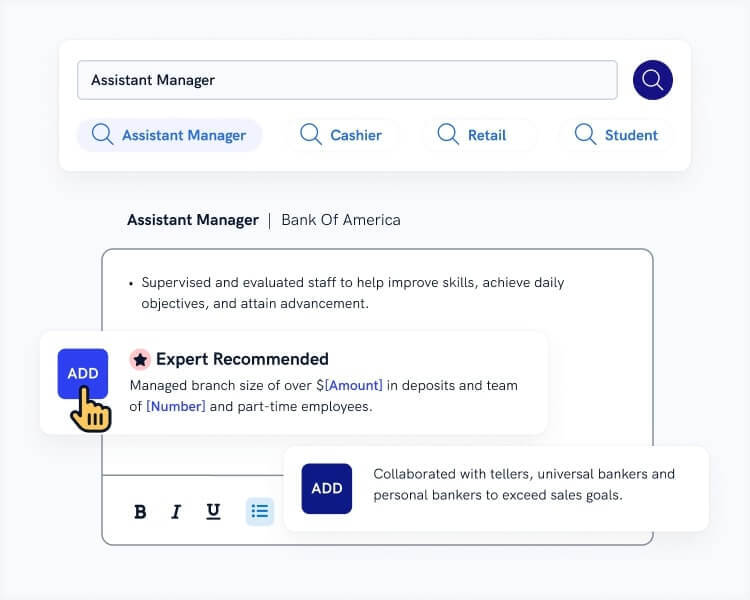
When you’re done, Zety’s resume builder will score your resume and our ATS resume checker will tell you exactly how to make it better.
4. Customize Your Audio Engineer Resume Education Section
Most people flub this:
Don’t just show audio education on a resume.
Add more skills proof.
Include bullets with groups, coursework you were passionate about, projects, and other wins.
Pro Tip: Whatever education extras you include, make sure they prove audio engineer skills. If you used Pro Tools in a project, list it in your audio engineer resume.
5. Show Audio Engineer Skills in Your Resume
Use this audio engineer resume skills list.
Audio Engineer Resume Skills
Hard Skills:
- Session recording
- Session setup and prep
- Equipment knowledge (microphones, amplifiers, speakers)
- Musical talent
- Setup & tear-down
- Post production
- Digital Audio Workstation (DAW) expertise
- Audio mixing
- Avid Pro Tools
- Scrum methodology
- Image-Line FL Studio
- Sound editing
- Video sound editing
- Live audio mixing
- Patching
Soft Skills:
- Written and oral communication skills
- Interpersonal skills
- Collaboration
- Organization
- Creativity
- Time management
- Problem solving
- Patience
- Adaptability
- Customer service
- Accuracy
But—
Zero in on the skills the job ad gives priority to.
Pro Tip: Show off your technical domain skills in a resume for audio engineer jobs. Soft skills are nice, but the boss needs to know if you can get the job done.
6. Add Other Sections to Your Audio Engineer Resume
You’re not just trying to make a buck.
But how will employers know that?
They’ll see it in your bonus resume sections.
Pick from:
- Activities
- Associations
- Certifications (CEA)
- Sports
- Awards & honors
- Conventions
- Projects
- Publications
- Volunteer gigs
- Compliments from employers
- Personal interests
- Language proficiency
7. Send a Cover Letter With Your Audio Engineer Resume
Is a cover letter important with an audio engineer resume?
Yep.
They’re the best way to stand out as a human being.
But don’t write a generic audio engineer cover letter.
- When formatting a cover letter, use the 3-paragraph style.
- The best way to start a cover letter is with an exciting hook. Those can be cool company facts or mind-blowing things you’ve done.
- The middle paragraph is where you show big-name clients, projects, and venues.
- To conclude a cover letter, promise something. That can just be, “I’d like to explain why Venue Now magazine put me in their top 30 list.”
- How many words is a cover letter? 300 to 350.
Pro Tip: Send an application follow-up email three days after you apply and then a week later to stay top-of-mind.
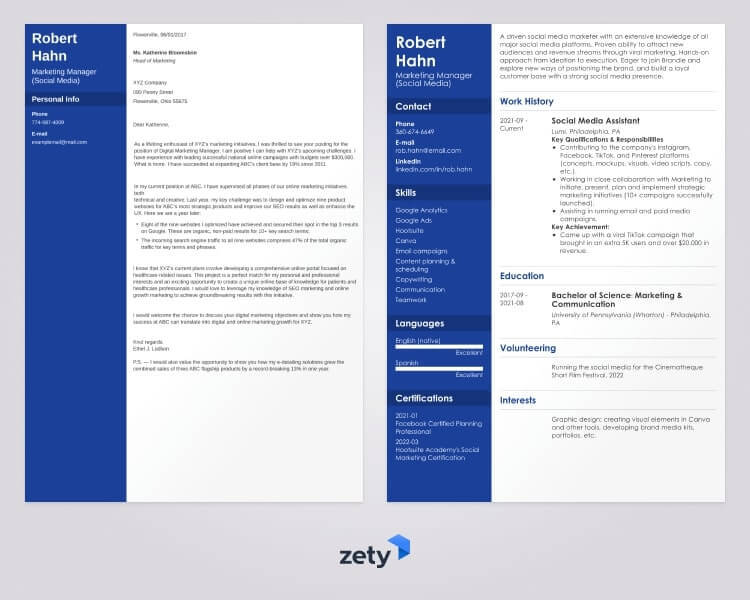
Plus, a great cover letter that matches your resume will give you an advantage over other candidates. You can write it in our cover letter builder here. Here’s what it may look like:
That’s it!
That’s how to write a resume for audio engineer positions.
About Zety’s Editorial Process
This article has been reviewed by our editorial team to make sure it follows Zety’s editorial guidelines. We’re committed to sharing our expertise and giving you trustworthy career advice tailored to your needs. High-quality content is what brings over 40 million readers to our site every year. But we don’t stop there. Our team conducts original research to understand the job market better, and we pride ourselves on being quoted by top universities and prime media outlets from around the world.

Follow Zety as a preferred source in Google
Get more resume writing tips, career insights, and workforce trends in your personalized search experience. Learn more >

Share:


